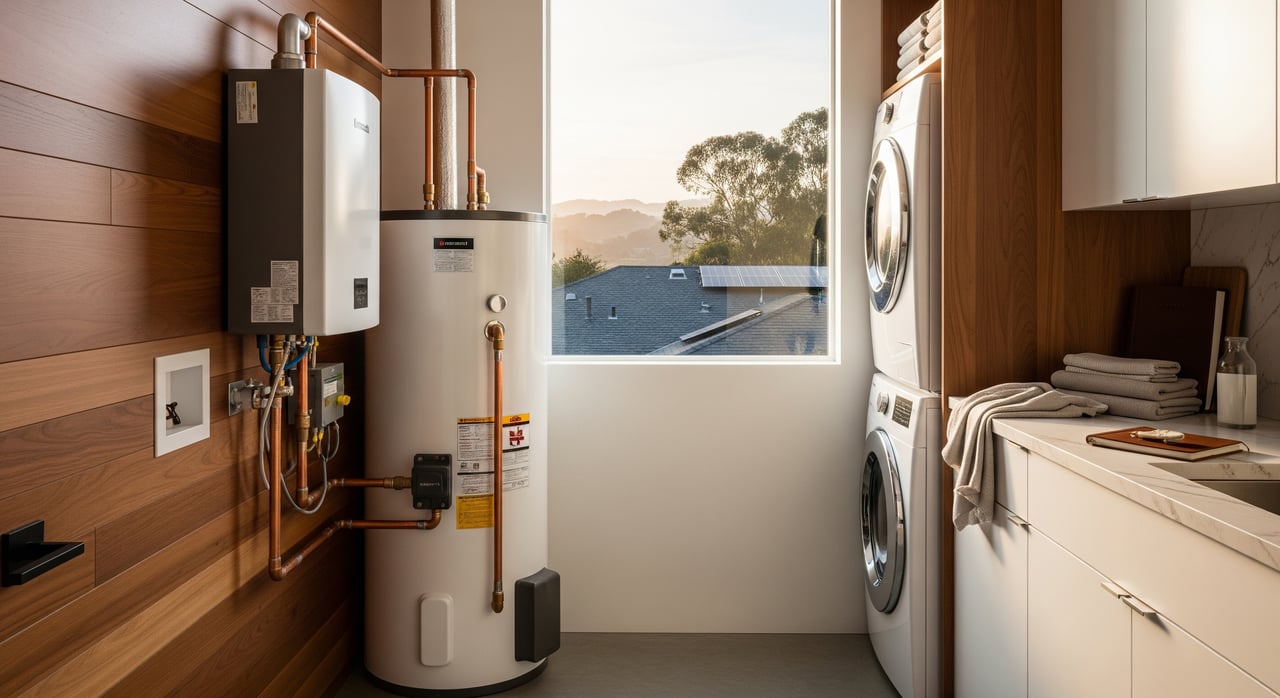
Thinking about replacing your water heater in Novato this year? A heat pump water heater can cut your water‑heating electricity use by roughly 50 to 70 percent compared with a standard electric tank, while helping lower household emissions. In Marin’s mild climate, these systems perform well and often pair nicely with solar. In this guide, you’ll learn how heat pump water heaters work in Novato homes, what to consider before you buy, where to check for incentives, and how to prepare for quotes to avoid surprises. Let’s dive in.
Why heat pump water heaters fit Novato
Climate advantage
Novato’s coastal Mediterranean climate is a strong match for heat pump water heaters (HPWHs). These systems draw heat from surrounding air, so moderate year‑round temperatures support higher efficiency. Unlike very cold inland areas, Novato homeowners typically see fewer performance penalties during cooler months.
Energy and emissions benefits
HPWHs deliver two to four units of heat for every unit of electricity they use, often noted as a COP of 2.0 to 4.0. That translates to significant savings versus electric resistance tanks. In California, where the electricity mix is relatively low carbon and many households receive service from Marin Clean Energy, switching from gas to an HPWH usually reduces life‑cycle greenhouse gas emissions. Exact savings depend on your home’s energy use and electricity source.
Homes and retrofit opportunities
Many Novato single‑family homes have garages, basements, or mechanical rooms that can accommodate an HPWH with proper airflow and a condensate drain. Older homes that already have a 240V circuit near the water heater may see smoother installations. If your home has a 100A main panel or limited breaker space and you are planning multiple new loads like an EV charger or a heat pump HVAC system, factor in the combined electrical demand during planning.
When a single upgrade makes sense
If you want one electrification upgrade that delivers tangible savings with less disruption than a full HVAC conversion, an HPWH is a practical candidate. It can often be installed in a day or two and works well as a standalone project, especially if you have a garage or mechanical area with good airflow and an accessible drain.
What to know before you install
Electrical needs
Most HPWHs require a dedicated 240V circuit. Many residential models run on 20 to 30 amp breakers, while larger units may need 30 to 50 amps or more. Always confirm the manufacturer’s specifications and ensure the installation meets local electrical code. If you plan additional large electric loads, discuss your home’s total capacity with a contractor to determine whether a panel upgrade is needed.
Space, ventilation, and condensate
HPWHs need airflow and should be placed in areas that stay above freezing. Garages, basements, and mechanical rooms typically work well. These units exhaust cool air and can lower the surrounding air temperature by about 10 to 25 degrees Fahrenheit while operating, which is usually fine in a garage but can be undesirable in a small heated closet. Plan for condensate drainage using a floor drain or a condensate pump.
Noise and placement
HPWHs have a fan and compressor, so you will hear them when they run. Noise levels vary by model, and many homeowners find them similar to a quiet dehumidifier in garages or utility spaces. Avoid placing them right next to bedrooms if you are sensitive to sound. Review decibel ratings and consider location carefully.
Sizing and recovery
You can choose integrated tank models from about 40 to 80 gallons and up. Hybrid models include electric resistance backup to handle peak demand. Select capacity based on household size and hot‑water usage. Manufacturers and ENERGY STAR offer sizing guidance to match your needs and preferred recovery rate.
Solar compatibility
If you have rooftop solar or plan to install it, an HPWH can help you use more of your on‑site generation. Heating water during solar‑producing hours can increase self‑consumption and further reduce grid purchases.
Permits and inspections in Novato
Replacing or installing a water heater typically requires building and electrical permits and a final inspection. Check requirements with the City of Novato Building Division. If you live in an unincorporated area, confirm whether Marin County or the city is your permitting authority. Your installer should follow manufacturer clearances and local code for plumbing, electrical, and condensate disposal.
Costs, timelines, and surprises
What drives total cost
Your final price includes the unit, installation labor, and any electrical or plumbing modifications. Costs rise with panel work, long wire runs for a new 240V circuit, condensate pumps, or re‑routing plumbing and drains. Relocating the water heater or doing extra drywall or carpentry can add time and expense.
Typical installed range
Across consumer and industry guides, installed HPWH projects generally run from roughly $2,000 to $6,000 or more, depending on capacity, site conditions, and whether electrical upgrades are needed. Bay Area labor rates trend higher than national averages. Ask for itemized quotes that separate equipment, labor, electrical work, and permit fees so you can compare apples to apples.
How long it takes
A straightforward replacement in the same location can be completed in a day or two, followed by the final inspection. If your project requires a service‑panel upgrade, long wire runs, or plumbing changes, expect several days to a week or more, depending on scheduling and inspection windows.
Avoid rework
The most common issues are insufficient breaker space, missing or inadequate condensate drainage, limited airflow in tight closets, and clearance or code misses. A thorough site assessment before ordering equipment helps avoid delays and extra costs.
Incentives in Marin County
Incentives can significantly reduce your out‑of‑pocket cost, but availability and rules change. Always verify current details before you buy or schedule installation.
- Federal tax credits. There are federal tax credits for qualifying heat pump water heaters. Check current IRS guidance and the U.S. Department of Energy for eligibility, model requirements, and documentation. Keep the manufacturer’s certification statement for your records.
- State and regional rebates. California, Bay Area regional networks, and county or city programs sometimes offer rebates for HPWHs, especially for electrification and income‑qualified households.
- Utility and CCA programs. Marin homeowners are typically served by PG&E for distribution and Marin Clean Energy for generation. Both have offered electrification programs and information in recent years. Funding cycles change, so check current program pages.
- BayREN and local opportunities. The Bay Area Regional Energy Network periodically offers rebates, contractor support, and financing options related to electrification.
- Income‑qualified programs. Some programs provide higher rebate amounts or low‑interest financing for eligible households, with different application steps.
How incentives are paid
- Point‑of‑sale or contractor‑applied rebates may reduce your cost immediately but often require specific product certifications and a participating installer.
- Post‑purchase rebates require online or mail‑in applications with receipts, model numbers, and proof of installation.
- Tax credits are filed on your annual return. Save all documents.
What to keep for your records
Hold onto model and serial numbers, invoices with line‑item equipment and labor costs, contractor license information, permits and inspection sign‑off, and any proof of recycling or disposal of the old unit.
Where to check today
Use these sources to find current incentives and rules:
- DSIRE (Database of State Incentives for Renewables & Efficiency)
- U.S. Department of Energy (Energy.gov) consumer pages for HPWHs
- California Energy Commission appliance and electrification resources
- PG&E customer programs for electrification
- Marin Clean Energy (MCE) customer programs
- BayREN (Bay Area Regional Energy Network)
- City of Novato Building Division
Step‑by‑step decision guide
1) Clarify goals
Decide what you want most: lower bills, lower emissions, a bridge to full electrification, or better use of solar. If you want a single upgrade with strong efficiency potential, an HPWH is often a smart first step.
2) Check your electrical posture
Confirm whether your current water heater is gas or electric and whether you have a nearby 240V circuit. If your main service is 100A or your panel is full, discuss options with a contractor, especially if you plan to add an EV charger or heat pump HVAC.
3) Assess location
Identify a spot with adequate airflow, appropriate clearances, and a safe condensate path. Consider whether cooling the surrounding air is acceptable and whether noise will be an issue.
4) Confirm permits and incentives
Before you purchase a unit, check city permitting steps and look up available rebates and tax credits. Some programs require pre‑approval or specific contractors.
5) Get itemized bids
Obtain at least two to three quotes that break out equipment, labor, electrical work, and permits. Ask whether the contractor handles rebate paperwork and is familiar with eligible models.
6) Compare net cost and timeline
Evaluate after‑incentive cost, expected energy savings, and scheduling. Some incentives have limited funding windows, so timing can matter.
7) Proceed and document
Pull permits, schedule installation, and keep all documentation for inspections, rebates, and tax filing. Register the manufacturer warranty if available.
Prep checklist for faster, cleaner quotes
- Photos. Take clear pictures of your current water heater (all sides), the electrical panel interior showing breaker labels and spaces, the planned location, and any nearby drains.
- Measurements. Note vertical and horizontal clearances, and distances to plumbing and drain lines.
- Current equipment info. Write down model, fuel type, tank size (gallons), and age of your existing unit.
- Utility details. Have recent utility bills and your MCE/PG&E account info handy to estimate savings and check program eligibility.
- Plumbing notes. Identify pipe materials, such as copper or PEX, in case adapters are needed.
- Contractor vetting. Confirm licenses and insurance for plumbing and electrical work. Prefer installers with HPWH experience and local permit history.
- Day‑of prep. Ensure easy access, plan for a temporary hot‑water outage, and confirm the condensate drainage path.
- Paperwork. Save invoices, model and serial numbers, contractor license details, permits and inspection records, and any warranty registration.
Local tips for Novato homes
- Garages are ideal. Many Novato homes have garage space that meets airflow and condensate needs, making for a simpler install and fewer noise concerns.
- Mind the panel if you are electrifying. If you’re also planning an EV charger or a heat pump HVAC system, have a contractor assess combined load to see if a panel upgrade makes sense.
- Plan for comfort in interior locations. If the only suitable spot is a small interior closet, discuss ventilation options so the unit can breathe and the room does not over‑cool.
- Schedule inspections early. Build in time for permits and final inspection to avoid delays, especially if you are coordinating other home projects.
Ready to move forward?
If you want a practical, lower‑disruption upgrade that saves energy in Novato’s climate, a heat pump water heater is worth a close look. Before you order equipment, confirm incentives, plan your electrical needs, and get itemized bids to compare true costs. If you are also preparing your home for sale, keep records of your upgrade so buyers can see the model, permits, and warranty details.
Have questions about how this upgrade fits into your broader home plans? Request a complimentary home valuation and consultation with Unknown Company. We can connect you with local pros, help you plan projects on your timeline, and keep you informed about what today’s buyers value in Marin.
FAQs
Will a heat pump water heater work in a Novato garage?
- Often yes. Garages usually provide the airflow and space a unit needs, along with a simple path for condensate drainage.
Do I need to upgrade my electrical panel for an HPWH?
- Not always. Many installs only need a dedicated 240V breaker. A panel upgrade is more likely if your panel is full or you are adding multiple large electric loads.
How noisy are heat pump water heaters?
- They are noticeable but typically acceptable in garages or mechanical rooms, similar to a quiet dehumidifier. Check model decibel ratings if noise is a concern.
How long do HPWHs last and what maintenance is typical?
- Expect a lifespan comparable to standard tanks, roughly 10 to 15 years, with routine maintenance like periodic filter and condensate checks and anode inspections per the manufacturer.
Are there rebates or tax credits for HPWHs in Marin County?
- Potentially, yes. Incentives vary by year and program and often require specific models and documentation. Check DSIRE, DOE, PG&E, MCE, BayREN, and City of Novato resources for current details.
Can an HPWH work well with my solar panels?
- Yes. Running the unit during daytime solar production increases self‑consumption and can further cut grid electricity purchases.